ABA Therapy or Preschool for Your Autistic 3-Year-Old: A Parent's Guide
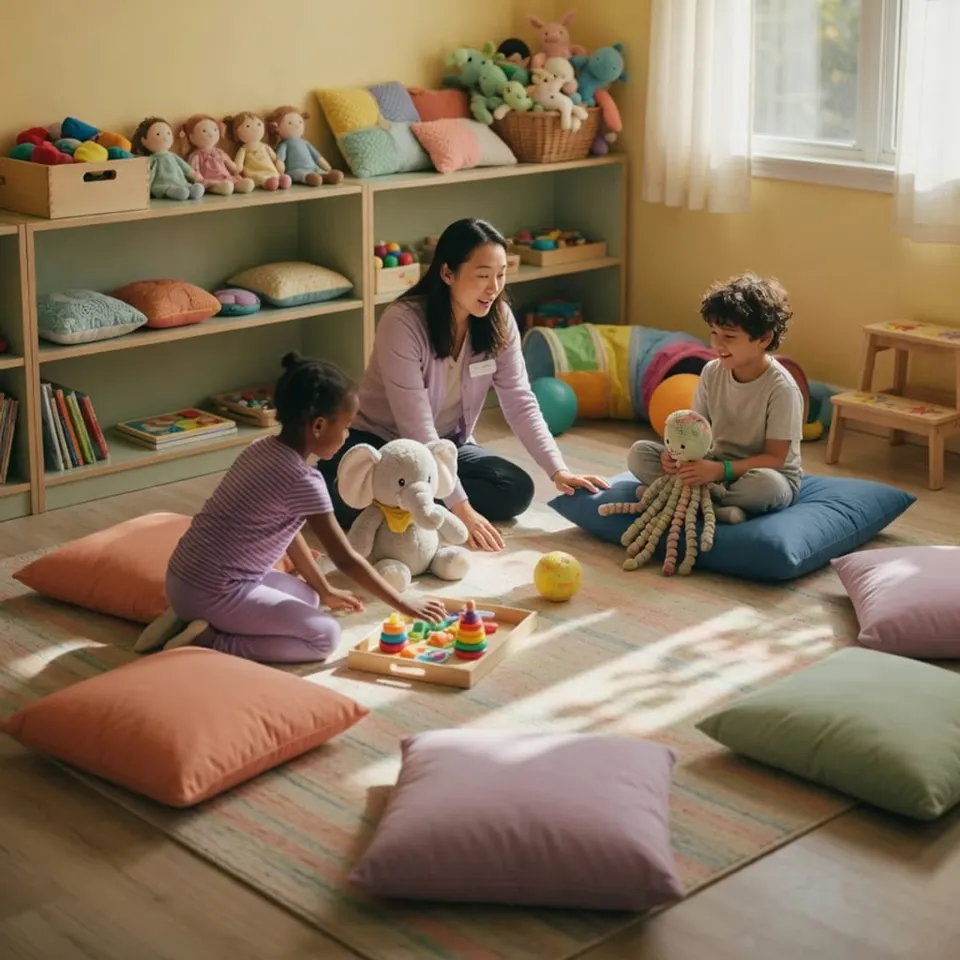
In short: For many autistic 3-year-olds, ABA therapy provides intensive, individualized skill-building, while preschool offers peer interaction and a structured classroom. The best choice depends on your child's needs, but many families use both-ABA during the day and preschool part-time, or vice versa. Nearby ABA Therapy is a free service that can match you with a BCBA-led provider that accepts insurance and Medicaid, helping you navigate this decision.
Key takeaways
- ABA therapy is typically more intensive (15-40 hours/week) and focuses on communication, social, and daily living skills through data-driven methods.
- Preschool provides a natural setting for peer modeling, school readiness, and exposure to a typical classroom routine.
- Many children benefit from a combination of both, such as ABA in the morning and preschool in the afternoon.
- ABA is often covered by insurance (including Medicaid) under an autism diagnosis, while preschool may have tuition costs or be free through public school special education.
Understanding Your Options at Age 3
When your child turns 3, the world of early intervention shifts. The early intervention system (Part C of IDEA) typically ends, and your child may transition to a preschool program through your local school district (Part B of IDEA) or a community preschool. At the same time, ABA therapy remains a powerful, evidence-based option for many autistic children. It's common to feel pulled between these two paths. This guide will help you understand what each offers, how they compare, and how you can create a plan that fits your child's unique needs.

🔗 Related reading: When Play Looks Different: How ABA Can Help · Local ABA Therapy
What ABA Therapy Looks Like for a 3-Year-Old
ABA therapy is a scientific approach to understanding and changing behavior. For a 3-year-old, it's play-based, fun, and highly structured. A Board Certified Behavior Analyst (BCBA) designs a program targeting skills like requesting (manding), following directions, imitating actions, playing with toys, and tolerating transitions. Sessions are often one-on-one with a trained therapist (RBT) who uses positive reinforcement to encourage desired behaviors. The intensity can vary: some children receive 10 hours a week, others 30 or more, depending on their needs.
Key Benefits of ABA
- Individualized: Goals are based on your child's specific strengths and challenges.
- Data-driven: Progress is tracked daily, so the program adjusts as your child learns.
- Intensive: Many children make rapid gains with consistent, focused teaching.
- Parent training: You learn strategies to support your child at home and in the community.
Common ABA Goals for a 3-Year-Old
- Requesting preferred items or activities (e.g., saying or signing 'more', 'ball').
- Following simple instructions (e.g., 'come here', 'sit down').
- Imitating sounds, words, and actions.
- Playing alongside or with a peer.
- Tolerating a non-preferred activity for a short time.
What Preschool Offers for an Autistic 3-Year-Old
Preschool, whether a general education classroom or a special education preschool, provides a different set of opportunities. Children learn from peers, follow a daily routine, and practice group skills like circle time, lining up, and sharing. For an autistic child, this can be a rich environment for social modeling and school readiness. Many public school districts offer free preschool for children with disabilities through an Individualized Education Program (IEP).
Key Benefits of Preschool
- Peer interaction: Natural opportunities to watch and learn from other children.
- School routine: Prepares your child for the structure of kindergarten.
- Group instruction: Learning to follow directions in a group setting.
- Social communication: Practice with turn-taking, greetings, and joint attention.
Potential Challenges
- Less individual attention: Teacher-to-student ratios are higher than in ABA.
- Not always autism-specific: General education teachers may lack specialized training.
- May be overwhelming: The sensory and social demands can be too much for some children.

🔗 Related reading: ABA Therapy Insurance in Arizona: Your Guide · Apply for ABA
Comparing the Two: Key Differences at a Glance
To help you decide, here's how ABA and preschool stack up on important factors:
- Intensity: ABA is typically more intensive (15-40 hours/week) vs. preschool (usually 2.5-6 hours/day, 2-5 days/week).
- Focus: ABA targets specific developmental skills; preschool focuses on school readiness and social exposure.
- Setting: ABA can be in-home, in-clinic, or community-based; preschool is in a classroom.
- Cost: ABA is often covered by insurance (including Medicaid) under an autism diagnosis; preschool may be free through the school district (IEP) or have tuition at private programs.
- Provider qualifications: ABA is overseen by a BCBA; preschool is led by a teacher (who may or may not have special education training).
Can You Do Both? Combining ABA and Preschool
Absolutely. Many families find that a combination works best. For example, your child might attend preschool in the morning (3 hours) and receive ABA therapy in the afternoon (2-3 hours). Or they might do ABA full-time and attend a 'reverse inclusion' preschool where typical peers are brought into the ABA clinic. The key is coordination: the BCBA and preschool teacher should communicate about goals and strategies. Some ABA providers even offer 'preschool readiness' programs that prepare children for the classroom setting.
How to Make the Combination Work
- Start with one: Many experts recommend beginning with ABA to build foundational skills (like sitting, attending, and requesting) before adding preschool.
- Communicate: Share your child's ABA goals with the preschool teacher and vice versa.
- Monitor your child: Watch for signs of stress or overstimulation. It's okay to adjust the schedule.
- Use a free matching service: Nearby ABA Therapy can help you find a BCBA-led provider that offers flexible hours and is experienced with combining therapy and school.
How to Decide: Questions to Ask Yourself
There is no one-size-fits-all answer. Consider these questions:
- What are my child's biggest needs right now? (e.g., communication, social skills, behavior, school readiness)
- How does my child handle structured vs. unstructured time?
- What does my child's IEP team recommend?
- What does my insurance cover, and what are the costs of each option?
- What is available in my area? (Nearby ABA Therapy can help you explore local options.)
Costs and Insurance: What You Need to Know
ABA therapy is typically covered by private insurance and Medicaid (Medi-Cal in California, for example) when prescribed by a doctor for an autism diagnosis. Many states have autism insurance mandates that require coverage. Preschool through the public school system (via an IEP) is free. Private preschools charge tuition, which can vary widely. Some families use a combination: ABA covered by insurance, preschool free through the school district, or they pay out-of-pocket for a private program. Always verify coverage with your insurance provider and ask about any copays or deductibles.
Common Mistakes to Avoid
- Assuming one is 'better' than the other: Both have value; the right choice depends on your child.
- Not communicating between providers: Lack of coordination can confuse your child and slow progress.
- Overloading your child: Too much therapy or school without downtime can lead to burnout.
- Waiting too long: Early intervention is key. Start somewhere, even if it's not perfect.
- Ignoring your gut: You know your child best. If something doesn't feel right, speak up.
Getting Started: Your Next Steps
If you're feeling overwhelmed, you're not alone. Start by talking to your child's pediatrician or a developmental specialist. Contact your local school district to request an evaluation for an IEP. And consider using a free service like Nearby ABA Therapy to get matched with a BCBA-led provider who can assess your child and recommend a program. They can also help you navigate insurance and find a provider that offers the flexibility you need, whether that's in-home, in-clinic, or a combination with preschool.